

Visit the Musée de l'Homme in Paris
What to see at the Musée de l'Homme
From prehistoric fossils to ethnographic finds, the Musée de l’Homme in Paris guides visitors on a journey through the origin and evolution of the human species. The exhibitions recount the diversity of cultures and the great milestones of our history.
The museum unwinds the history of humankind through artifacts, fossils, anatomical models and exhibitions, all along a path of discovery in which every room holds iconic stops and unmissable masterpieces. Planning a visit here means knowing how to pause before details that have changed the way we understand life and its evolution. The first thing to see is the extraordinary paleoanthropology collection. The focal point of this section is undoubtedly the original skull of Cro-Magnon Man: standing just a short distance from the remains of the first modern European Homo sapiens, dating back 28,000 years, stirs a profound emotion.
Among the most precious pieces of portable art in the world, the Venus of Lespugue immediately stands out. A small statuette in mammoth ivory, with its six exaggerated geometric forms, it is the very first true artistic masterpiece. Contemplating these fossils up close lets you touch with your own hands the link between us and our ancestors. Advancing into the heart of the Gallery of Mankind, your eyes are captured by an exceptional section devoted to human biology and variety. Here the main thing to see is the magnificent collection of historical anatomical models.
Among them stand out the incredible wax sculptures and the take-apart papier-mâché models made by Dr. Auzoux in the nineteenth century. These objects, used at the time to teach medicine, show with astonishing precision the solid, dense network of organs, muscles and blood vessels of the human body. Another visual installation not to be missed is the monumental sculpture of the busts. A wall displaying dozens of bronze and plaster casts made during the scientific expeditions of the nineteenth century around the world, designed to highlight the magnificent richness and diversity of human features, celebrating the uniqueness of every person.
For those seeking an anthropological and sensory experience, one of the most fascinating stops is the Wall of Languages. It is a singular interactive installation: by pulling suspended half-spheres, you can listen to dozens of different languages and dialects from all over the world, many of them at risk of extinction, to understand how speech is humankind’s most powerful cultural tool. The visit cannot be called complete without a stop in the rooms dedicated to the temporary exhibitions. Set in high-tech spaces, these displays change regularly and combine contemporary art with scientific research, tackling crucial themes such as climate change, the challenges of the body in the digital age or the evolution of sport.
Before heading towards the exit, the route leads to the museum’s concluding area, a true laboratory of reflection on the future. Here you encounter a stimulating interactive display, in which visitors are called upon to question the destiny of the Anthropocene and the coexistence of humankind and technology. Through touchscreens and full-immersion projections, you can analyse global data on the planet’s resources, leaving your own thoughts or your own answer to the ecological challenges that await future generations. A moment of profound awareness that turns the visit from a simple journey into the past into an active reckoning with the present.
The fitting conclusion to this experience is found in the central atrium. Before the imposing full-height panoramic windows, the interior space merges with the surrounding city. The close, majestic view of the Eiffel Tower, rising beyond the Trocadéro square, will leave you speechless. This panorama offers one last, unforgettable perspective: watching the cosmopolitan crowd moving at the foot of the Parisian monument, after exploring its biological and cultural roots in the previous rooms, will make you feel part of an incredible and infinite mosaic of human history.
Passes and Bundles
Useful info
Opening hours
The Musée de l’Homme is open from 11:00 to 19:00, closed on Tuesdays. Opening hours may vary, so always check the updated times before your visit.
Location
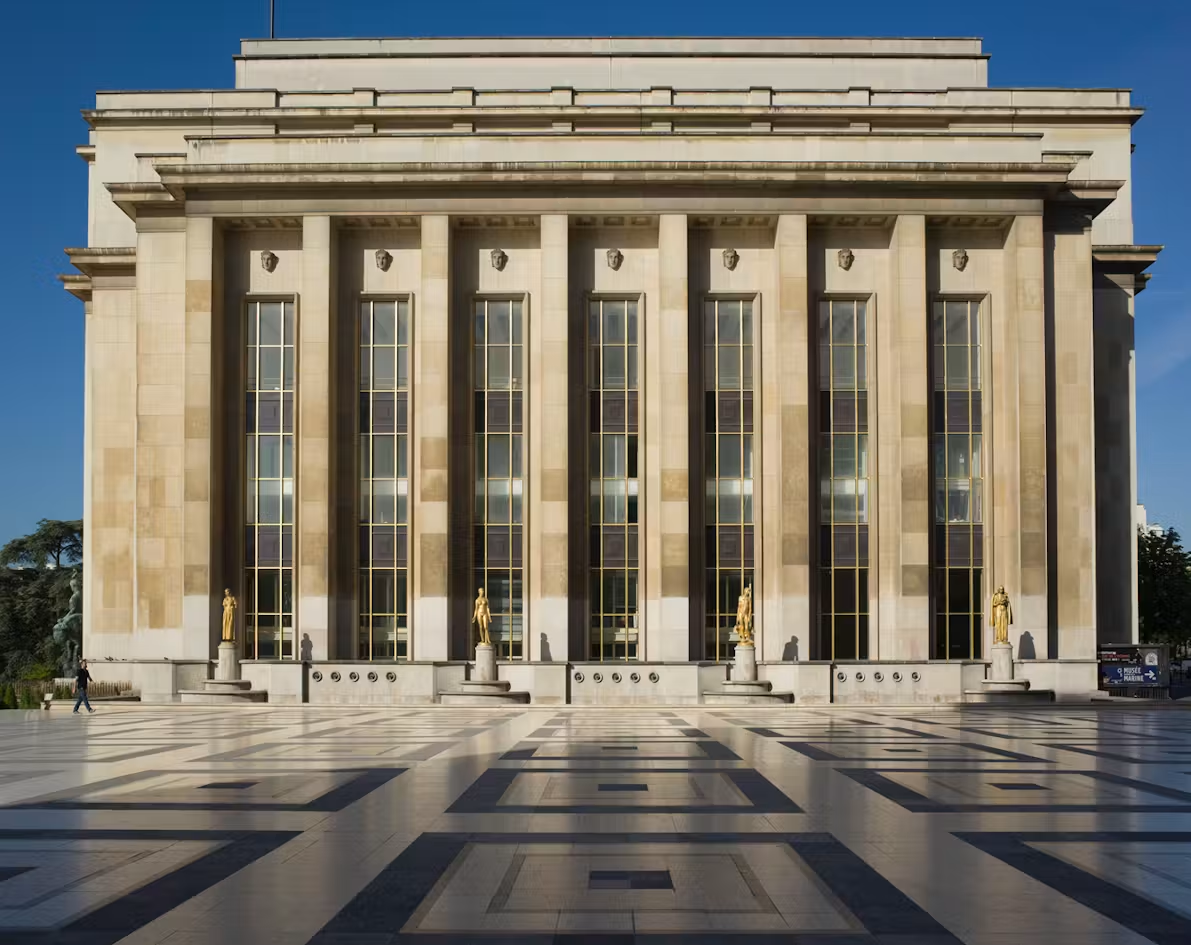
Musée de l’Homme, 17 Place du Trocadéro et du 11 Novembre, 75116 Paris, France.
How to get there
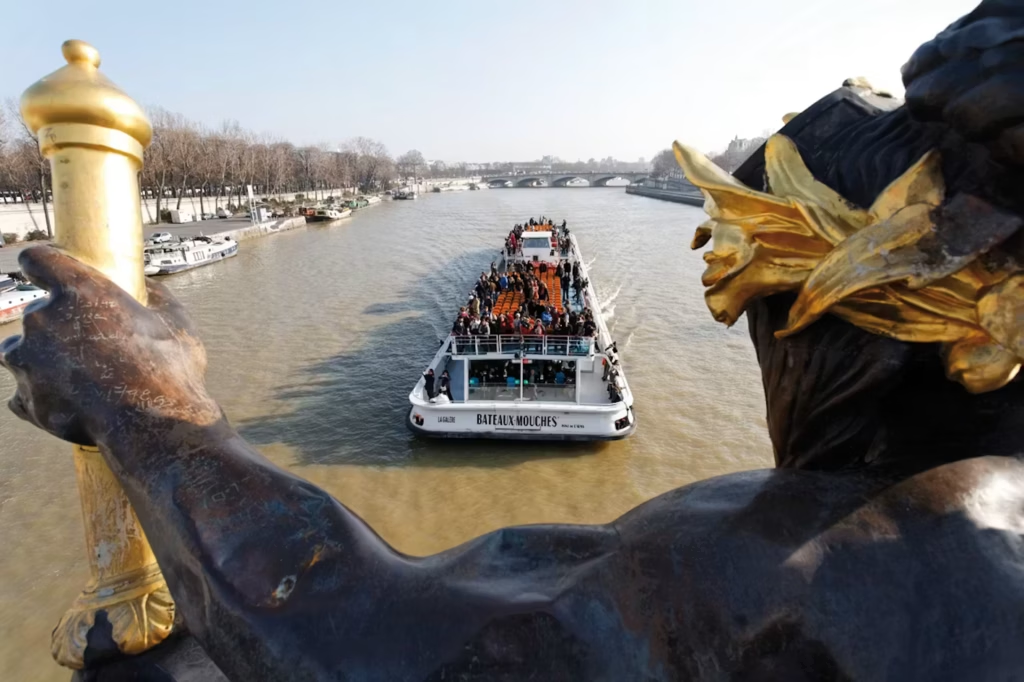
You can arrive by metro on lines 6 and 9 to Trocadéro, by bus on line 72 to Pont d’Iéna, or by riverboat to the Tour Eiffel stop. On foot, the museum is easily reachable from the Eiffel Tower by crossing the Trocadéro gardens.
Best time to visit
The best time is the morning or early afternoon, when you can visit the rooms more calmly and then stop at the Trocadéro for the view of the Eiffel Tower.
Duration of the visit
For your visit, allow about 1 hour and 30 minutes, the duration also indicated for the guided tours of the Galerie de l’Homme. Allow more time if you also want to see the temporary exhibitions.
Accessibility
The Musée de l’Homme offers an inclusive visit with ramps, elevators, sensory pathways and services dedicated to visitors with motor, visual, hearing and cognitive disabilities.
Opening hours
The Musée de l’Homme is open from 11:00 to 19:00, closed on Tuesdays. Opening hours may vary, so always check the updated times before your visit.
Location
Musée de l’Homme, 17 Place du Trocadéro et du 11 Novembre, 75116 Paris, France.
How to get there
You can arrive by metro on lines 6 and 9 to Trocadéro, by bus on line 72 to Pont d’Iéna, or by riverboat to the Tour Eiffel stop. On foot, the museum is easily reachable from the Eiffel Tower by crossing the Trocadéro gardens.
Best time to visit
The best time is the morning or early afternoon, when you can visit the rooms more calmly and then stop at the Trocadéro for the view of the Eiffel Tower.
Duration of the visit
For your visit, allow about 1 hour and 30 minutes, the duration also indicated for the guided tours of the Galerie de l’Homme. Allow more time if you also want to see the temporary exhibitions.
Accessibility
The Musée de l’Homme offers an inclusive visit with ramps, elevators, sensory pathways and services dedicated to visitors with motor, visual, hearing and cognitive disabilities.
Location map